

You sit down at your laptop with the best intentions. Class starts in two minutes. Then your phone buzzes, someone walks into the room, a notification pops up, and suddenly forty minutes have gone by and you have no idea what your professor just said. If this sounds familiar, you are not the only one struggling to stay focused during online classes. It is one of the biggest challenges students face today — and it costs more than just time. It costs grades, confidence, and sometimes entire courses. This guide gives you practical, tested strategies to fix that. And if you are already behind the curve, we will tell you how academic help and online classes support from GetMyExamsDone can get you back on track fast.
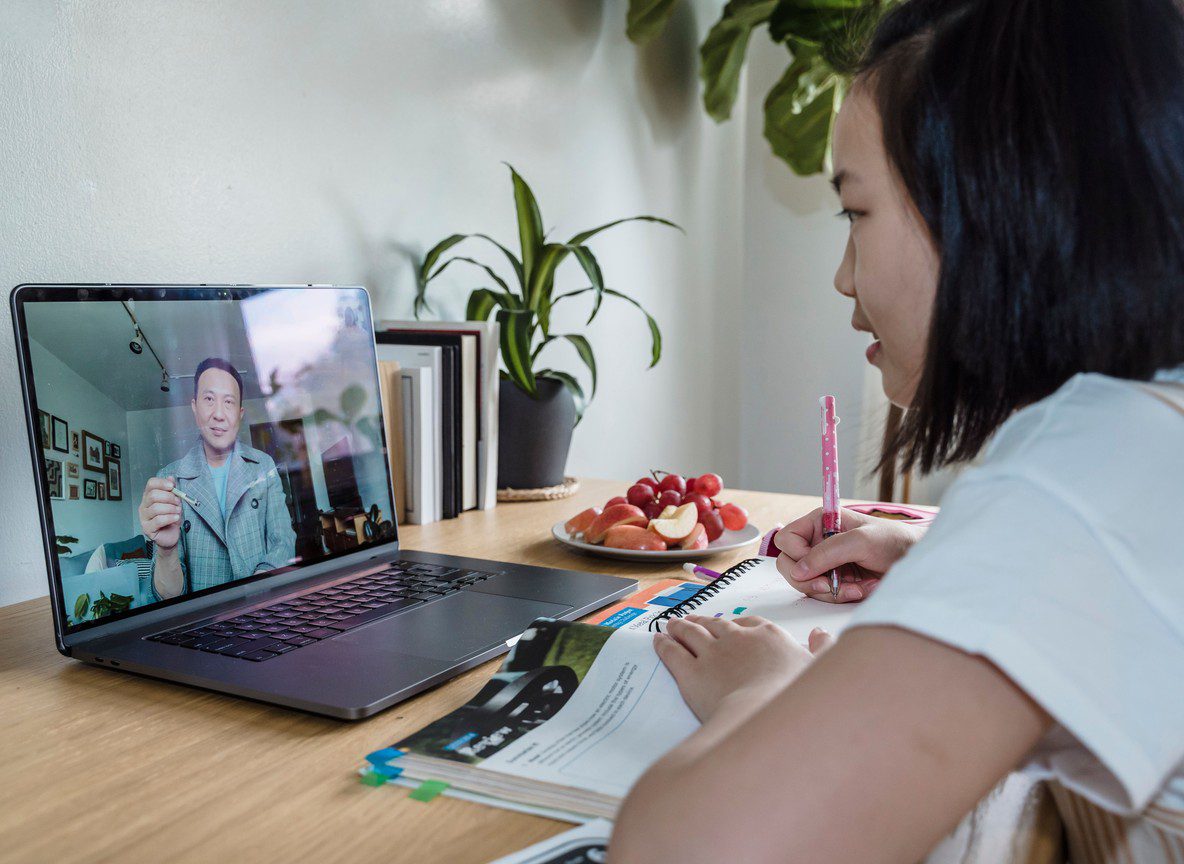
Why Staying Focused During Online Classes Is So Hard
Online learning sounds convenient. No commute, flexible schedule, class from your couch. But that same flexibility creates a focus problem that in-person learning never had.
When you are in a physical classroom, the environment does the work. Everyone around you is focused. The professor is right there. Leaving feels awkward. The social pressure keeps you engaged even when you would rather be somewhere else.
Online, none of those cues exist. Your home is designed for relaxation, not concentration. Your bed is ten feet away. Social media is one tab over. The moment class gets difficult or boring, your brain looks for the easiest exit — and your phone is right there waiting.
Add to that the fact that many online students are also working jobs, raising kids, or managing other commitments. Fatigue is real. Time is limited. And when you are already stretched thin, sitting through a 90-minute lecture feels impossible.
This is not a willpower problem. It is an environment and systems problem. The fix is not trying harder — it is building a setup that makes focus the path of least resistance.
Set Up a Study Space That Works for Your Brain
Your environment shapes your behavior more than you think. If you study from your bed, your brain associates that space with sleep and rest — and it will push back against concentration. If you study from the couch with the TV on, you are fighting a losing battle before you even open your notes.
You do not need a home office. You need a consistent, designated spot that your brain starts to associate with work. A corner of a table, a specific chair, even a particular spot at a coffee shop — pick it and stick to it.
A few things that make a real difference:
- Use headphones with ambient sound or white noise to block household distractions
- Put your phone in another room or use an app like Forest or Freedom to block social media during class
- Tell the people you live with your class schedule so they know not to interrupt
- Keep water, snacks, and anything you need nearby so you do not have excuses to get up
The goal is to reduce friction for focusing and increase friction for getting distracted. Small environmental changes stack up fast.
Use Active Engagement Techniques to Stay in the Room
Passive watching is the enemy of retention. If you are just letting the lecture play while you half-listen, you will zone out — and even if you stay present, the information will not stick.
Active engagement keeps your attention locked in because your brain has a job to do. Try these approaches:
Take handwritten notes. Studies from Princeton University show that handwriting notes improves comprehension and memory compared to typing. It forces you to process and summarize rather than transcribe. Source: Mueller & Oppenheimer, 2014 — Princeton
Use the Cornell note method. Divide your page into a main notes column, a cue column on the left, and a summary at the bottom. During class, fill the main column. After class, write key questions in the cue column and summarize at the bottom. This forces a second pass over the material.
Ask questions in chat. Most online platforms have a chat or Q&A feature. Use it. Typing a question — even if you answer it yourself two minutes later — keeps you mentally active.
Pause and predict. If your class is recorded or asynchronous, pause every ten minutes and try to predict what comes next or summarize what you just heard. This is one of the most effective learning techniques supported by cognitive science.
Manage Your Time With Blocks, Not Marathons
Sitting in front of a screen for three hours without a break does not work. Your concentration has a natural ceiling, and trying to power through it leads to diminishing returns — and total burnout.
The Pomodoro Technique is the most practical fix here. Study or attend class in focused 25-minute blocks, then take a 5-minute break. After four blocks, take a longer 20-30 minute break. This is not a trick — it is how your brain actually functions best.
During your breaks:
- Walk around, stretch, or go outside briefly
- Do not scroll social media — that is a cognitive trap that extends your “break” far beyond the time you intended
- Drink water and eat something if you need it
For longer class sessions you cannot pause, take micro-breaks mentally by shifting focus during low-intensity moments. Jot a quick summary. Review your notes. Stretch in your seat. Anything that resets your attention without tuning out completely.
Time management matters beyond individual study sessions too. Schedule your academic help and online classes work the same way you would schedule a job shift. Block it on your calendar, set alarms, and treat those blocks as non-negotiable.
Deal With the Mental Load, Not Just the Logistics
A lot of students struggle to stay focused during online classes not because of distractions in the room but because of distractions in their head. Anxiety about upcoming exams. Stress about grades. The nagging feeling that you are falling behind and do not know how to catch up.
That mental weight is exhausting. And exhaustion kills focus faster than any phone notification.
If academic stress is affecting your ability to function in class, the answer is not just better note-taking. You need to address the underlying pressure. Sometimes that means building a better study schedule. Sometimes it means reaching out to a tutor or study group. And sometimes it means getting professional academic help and online classes support so you can stop drowning and start making progress.
When Falling Behind Becomes a Bigger Problem
There is a point where productivity tips are not enough. You have tried the phone-free study room. You have done the Pomodoro blocks. You have taken notes by hand. And you are still behind — because you missed too much, or the workload is genuinely overwhelming, or life got in the way in a way you could not control.
That is where GetMyExamsDone steps in.
We work with students who are overwhelmed, behind, and out of options. Our team of subject experts handles assignments, quizzes, online class sessions, and exams across a wide range of disciplines — including nursing, mathematics, business, and more. Everything is confidential, plagiarism-free, and handled with deadlines in mind.
If you have a quiz tomorrow that you are not ready for, take a look at our take my online quiz for me service. If you have a proctored exam you are dreading, we handle those too — see our proctored exam help page for how it works.
We are not here to replace your education. We are here to help you get through a rough patch without losing your GPA or your sanity.
Build Habits That Stick Beyond This Semester
Short-term fixes get you through finals. Long-term habits change how you learn. Here are a few that students consistently report make the biggest difference:
Review your notes within 24 hours. The Ebbinghaus forgetting curve shows that you lose most of what you learn within a day if you do not revisit it. A 10-minute review the night after class does more than two hours of cramming a week later.
Use your learning management system fully. Most platforms — Blackboard, Canvas, Moodle — have tools students never use. Discussion boards, quiz review features, grade trackers. If you are on Blackboard or Canvas, you can also check out our Canvas and Blackboard class help if the platform itself is part of the problem.
Sleep more than you think you need to. Cognitive performance drops sharply on less than seven hours of sleep. Pulling an all-nighter before a test is almost always counterproductive.
Connect with classmates. Online learning feels isolating, but it does not have to be. Find one or two other students in your course to form a study group. Accountability works. Knowing someone else is watching helps you show up.
Frequently Asked Questions About How to Stay Focused During Online Classes
How do I stop getting distracted by my phone during online classes? Put your phone in a different room before class starts. If you need it nearby, use an app like Forest, Focus@Will, or your phone’s built-in focus mode to block notifications for the duration of your session. Out of sight genuinely means out of mind.
What if I have already missed too many classes and I am failing? Contact your professor first — many instructors will work with students who communicate early. If you need more direct help, GetMyExamsDone offers academic help and online classes support for students who need to catch up fast. Reach out through our do my exam for me page to see what options are available.
Is online learning harder than in-person classes? It requires more self-discipline, which many students underestimate at the start of a semester. The material is often the same, but the lack of external structure means you have to build that structure yourself. The strategies in this post help, but getting support early — rather than waiting until you are failing — makes everything easier.
Ready to Get Help Right Now?
You do not have to figure this out alone. Whether you need study strategies, subject-specific tutoring, or direct academic help and online classes support to get through a tough semester, GetMyExamsDone is here. Reach out on WhatsApp at +16823960074 or email us at info@getmyexamdone.com — we respond fast, we keep everything confidential, and we have helped thousands of students get back on track.
Image credits: Photo by Yan Krukau on Pexels; Photo by Annushka Ahuja on Pexels; Photo by Manuel Camacho-Navarro on Pexels
Sources and Related Reading
For authoritative background, see the National Center for Education Statistics, the National Council of State Boards of Nursing.
More from GetMyExamsDone: Can You Cheat During A Proctored Exam, How To Use My Phone During A Proctored Exam.
Related guides: Online Class Help.


